Bhara Bhangal Trek
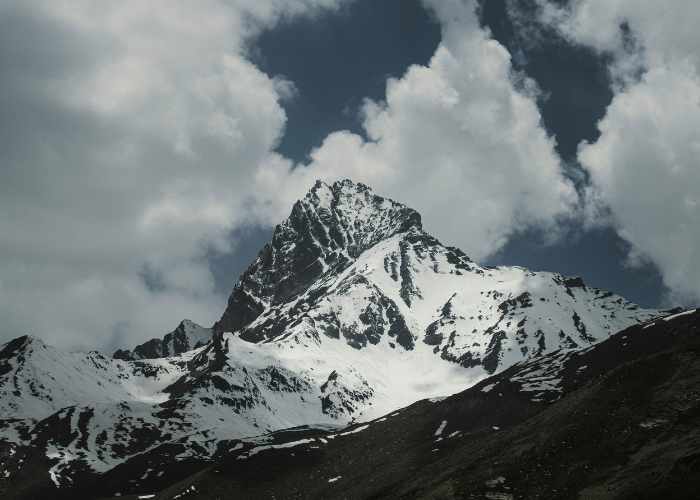
Bhara Bhangal Trek

Duration
15 Days

Difficulty
Moderate

Type
Trekking

Gear
Provided
ITINERARY
- Location : Himachal Pradesh, India.
- Best Time to Visit : Mid July – Aug, September – October
- Terrain: Forests, Alpine Meadows, Glaciers, Remote Villages, and River Valleys.
- Nearest Airports : Bhuntar (Kullu-Manali) for the start; Gaggal Airport (Dharamshala) near the end.
- Languages Spoken : Hindi
Our Overview
This trek route follows an old shepherd’s trail between Kangra and Kullu. Starting through the dense forests and Alpine meadows, the trail climbs over the high mountain passes, finally into Kangra, the most scenic Valley in the Western Himalayas. Each day, the trek winds through beautiful but diversified landscapes. This is another World, decorated by the variety of high-altitude Himalayan flora. This area is also popular for the Himalayan Brown Bear, black bear, and other Himalayan fauna, comprising fox, leopard, Musk Deer, Monkeys, and the Giant Indian flying squirrel, among others. Along the trail, there is ample opportunity to explore the remote Gaddhi Villages, which remain in isolation for most of the year.
Starting from Manali, the trail gradually climbs to the lush green meadow of Lama Dugh. The next part of the walk is through the moraines, affording a magnificent view of the mountain peaks of Kullu and Lahaul. This is followed by a steep climb to the top of the Kali Hani Pass. Descent on the moraines to the bank of a stream. The journey now winds down to the valley floor along the Soony River to the ancient Village of Bara Bhangal: a remote Village inhabited by the Gaddhi shepherds who lead a nomadic life.
From here, we trek amidst the spectacular view of the Dhauladhar Range over Thamsar Pass from rocky and glacial terrain to the softer landscape. The last part of the trek is through meadows, forests and the cascading waterfalls; soon, tiny villages can be seen hanging on the shoulders of the hillside, giving them a surrealistic appearance. Providing an extensive view of the Kangra Valley, the trek finally ends at Bir, A small Tibetan settlement world-renowned for paragliding. From Bir, one can drive to Dharamsala or, for an onward journey to Delhi.
MANALI to LAMADUGH (2,743m) ~ 5 to 6 hours:
The first day of the trek goes through cool forests of giant deodar (cedar), alder and oak. The trail climbs gently at first through the Manalsu valley along the Manalsu torrent. Extensive views of the Kullu Valley appear and slowly fade into the distance as the degree of the gradient decreases; the gentle slope of the first campsite in the lush green meadows of Lamadugh is reached. From here, beautiful views of the surrounding peaks open up.
LAMADUGH to RIALI THATCH (3,414m):
The trail now begins to ascend steeply through woodland and meadow, with wild alpine flowers strewn all around. On the way, brilliant shrubs of Rhododendron and Birch pave the way to the ridge, looking out across spectacular peaks, after which a descent leads to the campsite at Dohra Nallah.
RIALI THATCH to base of KALIHEYNI PASS (4,725m):
A lovely walk through lush green forests to the campsite at the base of the Kaliheyni Pass. The campsite itself is at an elevation of 4,023m. The mountain peaks of the Kullu and Lahaul valleys are visible throughout.
Over KALIHEYNI PASS to MEADOW CAMP - 8 to 9 hours:
The landscape slowly begins to change as forests and meadows give way to rocky outcrops with patches of snow starting to appear. A rather steep climb through glacial debris and snow leads to the top of the pass, from where breathtaking views are available. After a brief halt, a descent through glacier and moraine leads to the campsite on the banks of a sparkling mountain stream.
MEADOW CAMP to GADDI THACH (3,577m):
The trail now leads down into the Sunni River Valley and up to the buff overlooking the river. Camp is set at Gaddi Thach.
GADDI THACH to LAMBAPAD - 3 to 4 hours:
Leaving this lovely campsite, the path winds through rocky terrain, soon replaced by meadows again. The river rushes through spectacular gorges and is crossed via a snow bridge. Forests begin to appear, and soon the campsite, with an abundance of dry wood next to a sparkling stream, is reached.
LAMBAPAD to SUNNI VALLEY CAMP (3,658m):
The trail now descends to the riverbank. The campsite is by a stream, which adds to the beauty of the surrounding landscape, one of the most magnificent in the Western Himalayas.
SUNNI VALLEY/BARA BANGAL (2,286m):
The trail now winds its way down towards the valley floor, after which an almost level walk leads to the camp just before the tiny ancient village of Bara Bangal.
REST DAY:
A remote and isolated village, Bara Bangal is open only for four or five months of the year. The inhabitants are the legendary Himalayan shepherds - the Gaddis - who lead a nomadic life, herding their flocks of sheep into high mountain pastures once the snow melts and then returning to their isolated existence in the village.
Note: It is recommended that there be two rest days in Bara Bangal; one to visit Kail Dhar, which offers a 360-degree panoramic view of snow peaks and the second day to visit the charming village of Bara Bangal.
BARA BANGAL to UDAG 6 to 7 hours:
A steady climb, with the scenery changing quite dramatically and the air getting cooler, leads to the campsite at Marhi, at the base of the Thamsar Pass. The evening chill is replaced by the comfortable warmth of a lively campfire.
UDAG to PANHARTU over THAMSAR PASS (4,800 m) - 8 to 9 hours:
A long walk today. The trail slowly emerges from the rocky terrain into the softer landscape of lakes, meadows and forests. Numerous lakes dot the countryside, interspersed by cascading waterfalls. A descent through green wooded slopes leads to a tiny tea shop and a while later, to the tiny village of Palchak. Camp nearby.
PANHARTU to RAJGUNDA - 5 to 6 hours:
A very pleasant day's walk through a leafy path and soon tiny villages, seemingly hanging on the shoulders of the hillsides, make their appearance. The camp is set near the small village of Billing.
RAJGUNDA to BIR - 2 hours:
The path leads to the town of Bir. On the way, extensive views of the lush green Kangra Valley open up. A steep descent leads to the tiny Tibetan settlement of Bir. Drive from Bir to Dharamsala.
Dharamshala (1387 m):
To the north, the Kangra valley is flanked by the snow-clad Dhauladhar ranges of the Himalayas. Founded in 1855, Dharmshala is the principal township of Kangra, commanding a splendid view of the surrounding country. Surrounded by deodar forests, it is set against a backdrop of massive snow-capped peaks on three sides.
Kangra Valley is one of Himachal’s most beautiful valleys. It rolls down the Southern edge of the magnificent Dhauladhar Range. While the snow line remains close enough at all times and during the winter months, the Northern part is swaddled in a blanket of freshly fallen snow, allowing the magic of Kangra to take on yet another hue. Numerous ancient temples like Bajreshwari, Rock-cut Temples of Masroor and the Norbilingka Institute lie on the plains below Dhauladhar.
Astronomical Medical Center:
About 8 km from Norbulingka Institute. Tibetan medicine is made from herbs gathered from the high altitude of the Himalayas. This herbal medicine can cure many different diseases and is famous all over the world.
McLEODGANJ:
If you think about Lhasa (Tibet), the only other name that comes to mind is McLeod Ganj. The name has almost become synonymous with Lhasa. This is where His Holiness Dalai Lama, the spiritual leader of the Tibetans, resides; it is also home to the Tibetan Government in exile. There are many gompas to visit and some of them house treasures of ancient and priceless thankas and scrolls. Tibetan Institute of performing Arts (TIPA) preserves a number of musical dance and theatrical traditions of Tibet.
Dharamsala to Delhi (Or drive to Pathankote and train to Delhi)
Note: It is also possible that a route change may become necessary due to weather, inaccessibility through the mountain passes due to heavy snow, the condition of the trail and the physical fitness of the clients.
What To Bring For The Trek
- Warm internal clothing (woollen and fleece, thermals)
- Waterproof and windproof clothing
- Comfortable hiking boots with good resistance against the snow and water
- Haversack
- Sandals (for river crossings)
- Woollen/tennis socks
- Gloves
- Cap and Beanie
- Sunglasses
- Sunscreen lotion
- Water bottle
- Torch and batteries,
- Chlorine pills (OPTIONAL: mountain stream water is very clean and pure and we do provide boiled water during the trek)
Climate
Daytime temperatures in the sun are pleasant but often windy. At night, and during rain or snow (especially in September and October), the temperature can drop sharply, sometimes below zero, so it’s important to be well-prepared with the recommended clothing and gear.
Logistics Provided During The Trek
- Accommodation in a two-person tent (high-altitude alpine tents of good quality)
- Heavy foam pad mattresses
- Sleeping bags
- Freshly cooked meals
- Services of an experienced guide and cook
- Utensils and crockery
- Kitchen tent
- Toilet tent, ponies or porters
- First aid kit
- Transportation during the trek

We’re an ethical eco-travel agency led by industry veterans, offering tailored Trans-Himalayan journeys.
Further Links
Get In Touch
- 163/1, Palm Meadows, Ramagondanahalli, Whitefield, Bengaluru 560066
- +91 98450 28448
- support@treksntrails.in